Mar 03 2010

Do General Insurance Companies Really Lose Money?

Published by lioninvestor under Insurance

I am sure all of us frequently read in the newspapers about motor insurance premiums having to go up because of ever increasing claims. And how insurance companies are making losses from their motor insurance portfolio.

Have you ever wondered why so many of them are still around despite (supposedly) making losses year after year?

I don’t for one second doubt the part on increasing motor claims, but that only reflects half the story. The profitability of a general insurance company depends heavily on two factors:

  1. Their underwriting loss/profit (difference between premiums and claims plus expenses)
  2. Their investment loss/profit

What most people fail to appreciate is that an underwriting loss is expected and perfectly normal in the course of business. A good insurance company would be able to remain profitable even in the face of underwriting losses.

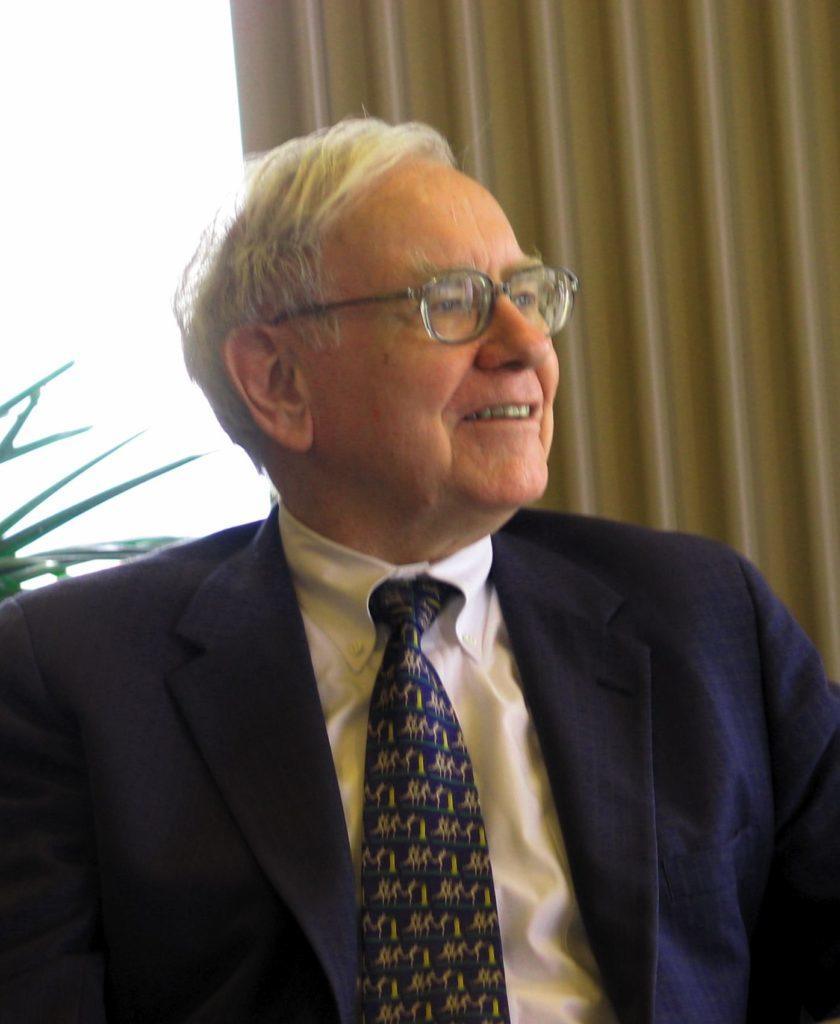
This is something that Warren Buffett has bought up repeatedly many times in his annual letters to his shareholders. I have reproduced below the section that deals with this subject from his latest letter which was published last Saturday (The entire letter can be found here).

Note: Property-casualty insurance would be similar to what we call General Insurance in Singapore. It refers to the class of insurance that covers motor, home, property, etc. The other class of insurance is Life Insurance.

Extracted from Warren Buffett’s 2010 letter to Berkshire’s Shareholders on 2009 Performance

warren buffettOur property-casualty (P/C) insurance business has been the engine behind Berkshire’s growth and will continue to be. It has worked wonders for us. We carry our P/C companies on our books at $15.5 billion more than their net tangible assets, an amount lodged in our “Goodwill” account. These companies, however, are worth far more than their carrying value – and the following look at the economic model of the P/C industry will tell you why.

Insurers receive premiums upfront and pay claims later. In extreme cases, such as those arising from certain workers’ compensation accidents, payments can stretch over decades. This collect-now, pay-later model leaves us holding large sums – money we call float” – that will eventually go to others. Meanwhile, we get to invest this float for Berkshire’s benefit. Though individual policies and claims come and go, the amount of float we hold remains remarkably stable in relation to premium volume. Consequently, as our business grows, so does our float.

If premiums exceed the total of expenses and eventual losses, we register an underwriting profit that adds to the investment income produced from the float. This combination allows us to enjoy the use of free money – and, better yet, get paid for holding it. Alas, the hope of this happy result attracts intense competition, so vigorous in most years as to cause the P/C industry as a whole to operate at a significant underwriting loss. This loss, in effect, is what the industry pays to hold its float. Usually this cost is fairly low, but in some catastrophe-ridden years the cost from underwriting losses more than eats up the income derived from use of float.

In my perhaps biased view, Berkshire has the best large insurance operation in the world. And I will absolutely state that we have the best managers. Our float has grown from $16 million in 1967, when we entered the business, to $62 billion at the end of 2009. Moreover, we have now operated at an underwriting profit for seven consecutive years. I believe it likely that we will continue to underwrite profitably in most – though certainly not all – future years. If we do so, our float will be cost-free, much as if someone deposited $62 billion with us that we could invest for our own benefit without the payment of interest.

Let me emphasize again that cost-free float is not a result to be expected for the P/C industry as a whole: In most years, premiums have been inadequate to cover claims plus expenses.

Consequently, the industry’s overall return on tangible equity has for many decades fallen far short of that achieved by the S&P 500. Outstanding economics exist at Berkshire only because we have some outstanding managers running some unusual businesses. Our insurance CEOs deserve your thanks, having added many billions of dollars to Berkshire’s value. It’s a pleasure for me to tell you about these all-stars.

No responses yet

Feb 24 2010

Charlie Munger’s Parable of Basicland

Published by lioninvestor under Market/Economy

Charlie Munger is the vice-chairman of Berkshire Hathaway Corporation and long time partner of Warren Buffett.

charlie mungerUsually, Charlie doesn’t say much in public but there are times he does. A couple of days ago, he wrote a parable about how a nation called Basicland went from riches to ruins. He relates our financial markets as one big casino which attracted highly talented engineers.

Charlie gives a pessimistic view on the future of America’s economy. This view is in contrast to the optimistic view of Warren Buffett.

You can read Charlie’s parable here:

Basically, It’s Over – A parable about how one nation came to financial ruin.

2 responses so far

Feb 12 2010

On the Brink – Henry Paulson

Published by lioninvestor under Books

On the Brink is a book written by former Treasury Secretary Henry Paulson. It gives an insider account of the events that unfolded in the biggest financial crisis that took place since the Great Depression.

On the Brink: Inside the Race to Stop the Collapse of the Global Financial System

During the crisis, major institutions including Bear Stearns, Fannie Mae, Freddie Mac, Lehman Brothers, AIG, Merrill Lynch, and Citigroup all stood at the edge of collapse. Decisions had to be made at lightning speed to prevent the financial system from collapsing.

on the brink henry paulson“The pace of events during the financial crisis of 2008 was truly breathtaking. In this book, I have done my best to describe my actions and the thinking behind them during that time, and to convey the breakneck speed at which events were happening all around us.

I believe the most important part of this story is the way Ben Bernanke, Tim Geithner, and I worked as a team through the worst financial crisis since the Great Depression. There can’t be many other examples of economic leaders managing a crisis who had as much trust in one another as we did. Our partnership proved to be an enormous asset during an incredibly difficult period. But at the same time, this is my story, and as hard as I have tried to reflect the contributions made by everyone involved, it is primarily about my work and that of my talented and dedicated team at Treasury.”

Earlier this week, Warren Buffett and Henry Paulson appeared in an informal 50-minute “conversation” that focused on Paulson and the events he writes about in his book, On the Brink: Inside the Race to Stop the Collapse of the Global Financial System

Here, in two parts, is the video recording of the entire event:


No responses yet

Dec 02 2009

Timeless Warren Buffett Quotations

Published by lioninvestor under Others

These are quotations made by Warren Buffett in the past which turned out to be correct and will probably hold true in the future.

  1. It is the nature of capitalism to periodically have recessions. People overshoot.
  2. warren buffett quotationsWe’ve got a wonderful economy… There’s never been anything like that in the history of the world. We live seven times better than the people did a century ago on average… We’ve had problems all along. If you look at the last century, we had that Great Depression and World War Two, we had the Cold War, we had the atomic bomb, but the country does well.
  3. I made by far the best buys I’ve ever made in my lifetime in 1974. And that was a time of great pessimism and the oil shock and stagflation and all those sort of things. But stocks were cheap.
  4. What’s nice about investing is you don’t have to swing at pitches. You can watch pitches come in one inch above or one inch below your navel, and you don’t have to swing. No umpire is going to call you out.
  5. You’re neither right nor wrong because other people agree with you. You’re right because your facts are right and your reasoning is right—and that’s the only thing that makes you right. And if your facts and reasoning are right, you don’t have to worry about anybody else.
  6. If they reduce the price of hamburgers at McDonald’s today I feel terrific. Now I don’t go back and think, gee, I paid a little more yesterday. I think I’m going to be buying them cheaper today. Anything you’re going to be buying in the future, you want to have get cheaper.
  7. They know that overstaying the festivities – that is, continuing to speculate in companies that have gigantic valuations relative to the cash they are likely to generate in the future – will eventually bring on pumpkins and mice. But they nevertheless hate to miss a single minute of what is one helluva party. Therefore, the giddy participants all plan to leave just seconds before midnight. There’s a problem, though: They are dancing in a room in which the clocks have no hands.
  8. The world went mad. What we learn from history is that people don’t learn from history.

These are some of the attributes that I think would make a successful investor:

  • Independent thinking and avoiding the herd instinct
  • Patience – both in buying and selling
  • Decisiveness to think when the market calls for it

No responses yet

Nov 18 2009

Warren Buffett and Bill Gates – Keeping America Great

Published by lioninvestor under Others

Last week, Warren Buffett and Bill Gates were at the Columbia Business School at a special CNBC event to answer questions from their students. The areas covered:

  • Capitalism
  • How greed and fear contributed to last year’s crisis
  • Goldman Sachs
  • Appropriate role of government
  • The industry that will produce the next Bill Gates
  • Buffett’s railroad exposure
  • Whether the stock market rally is real
  • Advice for those who are still unclear about what to do in life
  • How to allocate capital today

Watch the video here:


The full transcripts of the session can be obtained here:

Download Warren Buffett and Bill Gates Columbia Business School Full Transcript

No responses yet

Next »